Abingdon Plantation: Surprising History in DCA Airport
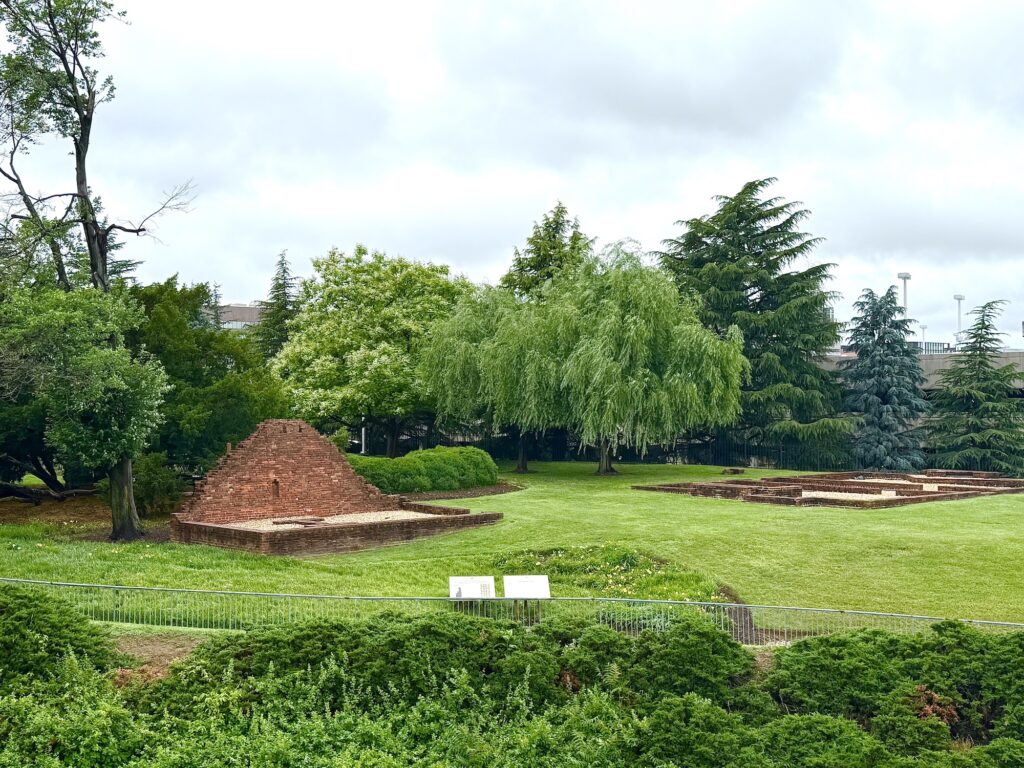
Abingdon Plantation, located between the parking garages at Ronald Reagan Washington National Airport, is a historical site that most people miss.
Most travelers rushing to catch flights have no idea they’re walking past a historical site with ties to President George Washington.
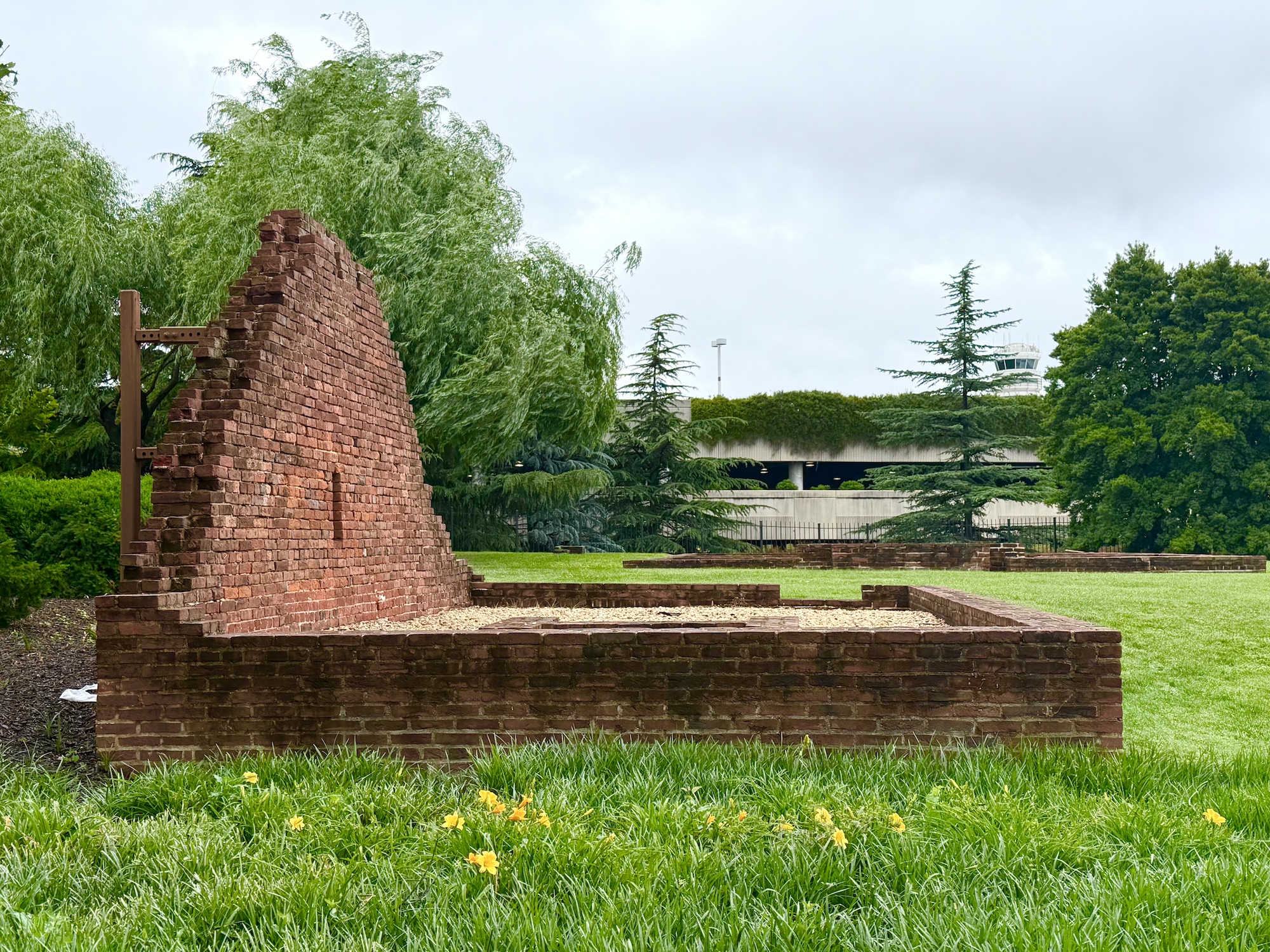
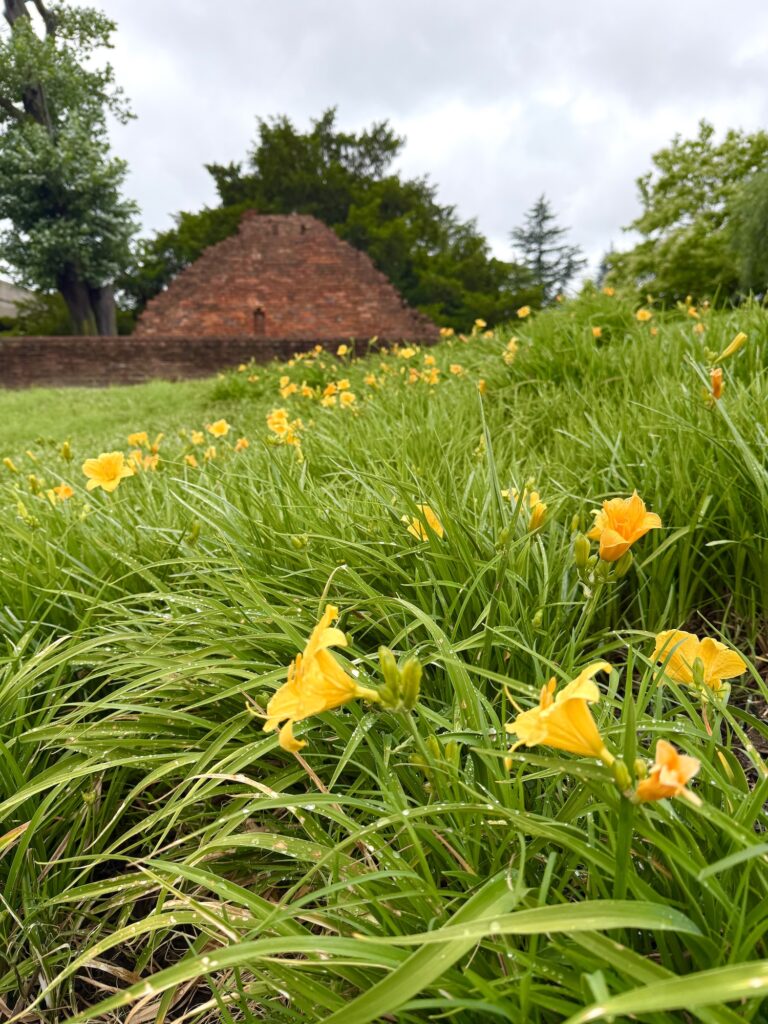
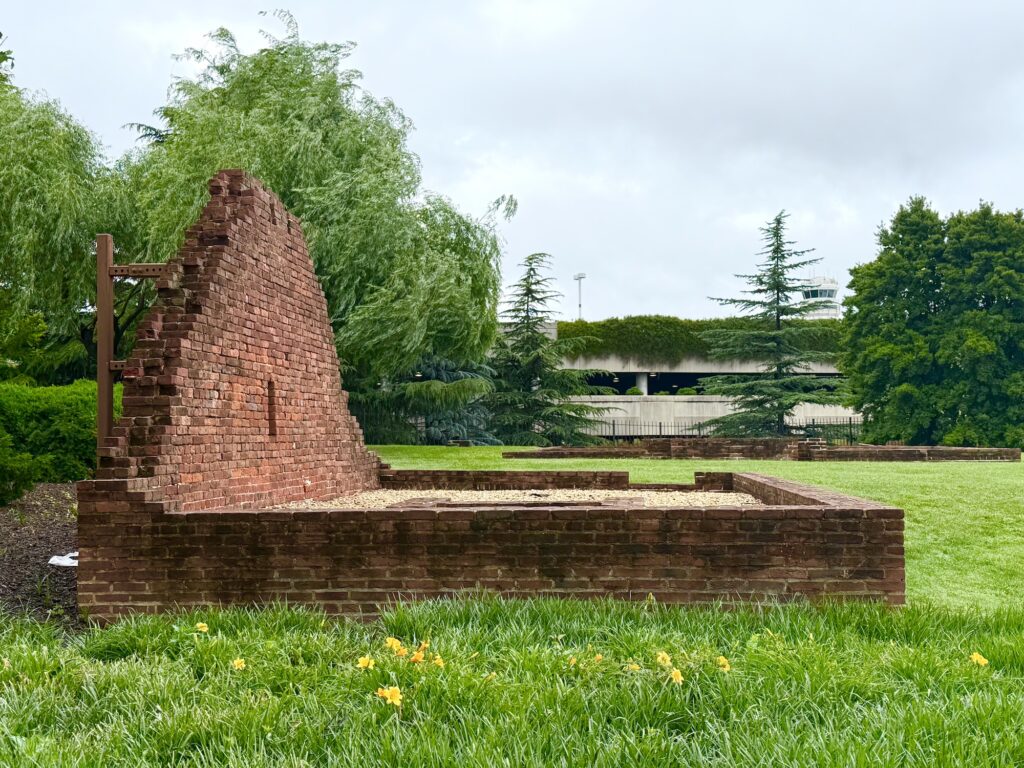
It’s not a replica. It’s the actual structure where members of the Washington family lived in Northern Virginia, and this ancient plantation listed on the National Register of Historic Places is uniquely protected among one of America’s busiest airports.
How to Visit Abingdon Plantation
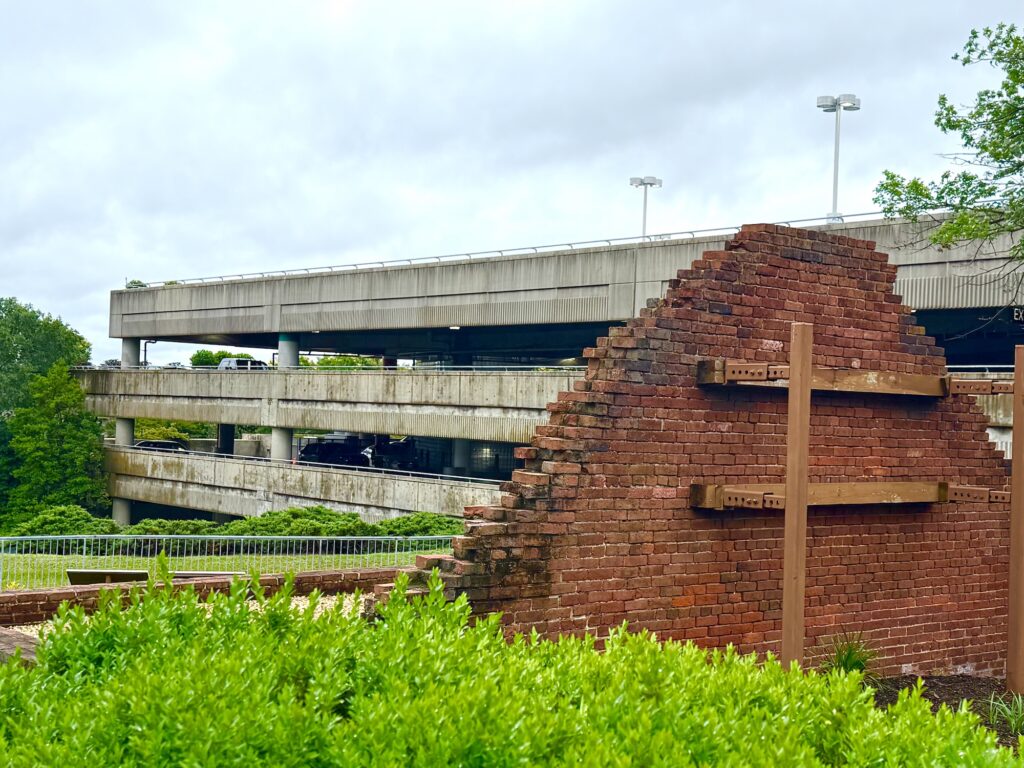
The plantation ruins are located close to the Metro station and between parking garages A and B, just outside of the rental car return.
It is easy to visit as you walk to the Terminal.
This location is OUTSIDE of security, so even if you aren’t flying into or out of DCA, you can still come visit!
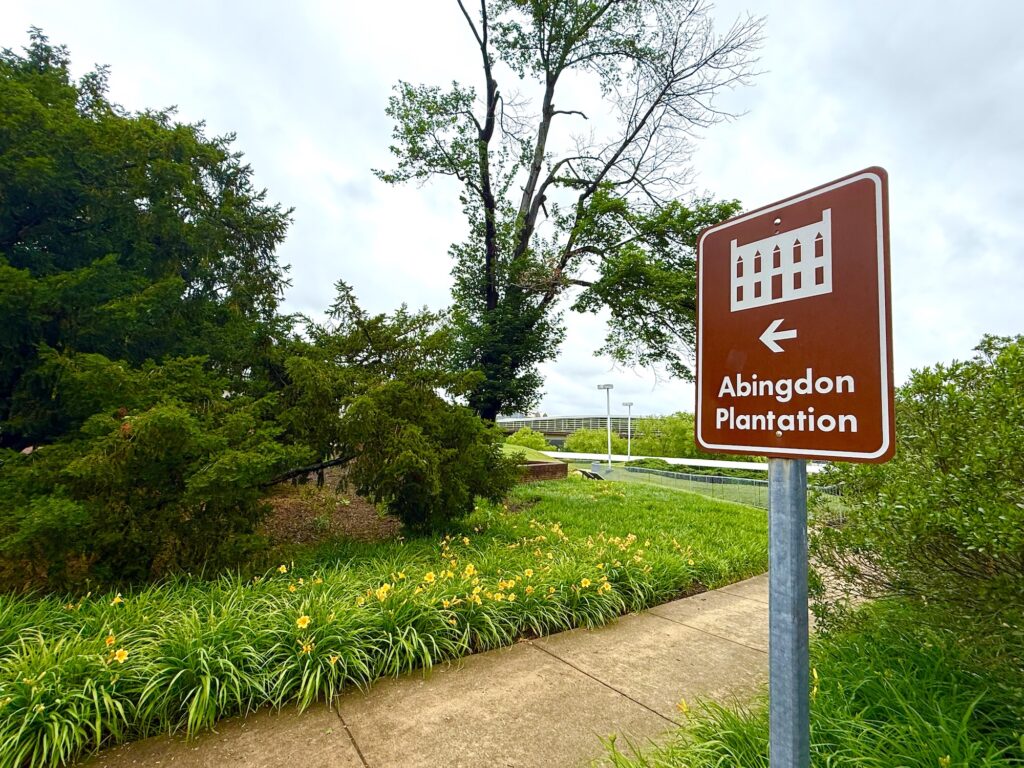
If you get off the metro towards Terminal 1, take a right towards the parking garages rather than turning left towards the airport. Go through the parking garage to find it.
There is a very interesting historical gallery in the airport, as well, with videos and artifacts.
There are information kiosks with volunteers throughout the airport. You can always ask these helpful volunteers how to get to this historical site inside the airport.
Helpful Tip: Abingdon Plantation is located outside of Washington D.C. It is NOT located in Abingdon, Virginia.
Abingdon Plantation History
Native Americans first lived on this land along the Potomac River, and many artifacts such as stone tools and ceramic vessels have been found.
The original land grant of this area was 6,000 acres. Robert Howson, an English shipmaster, was awarded the land in 1669 for transporting settlers to the Virginia colony.
Within a month after receiving the land, Howson sold it to John Alexander, a sea captain and surveyor who emigrated from Scotland to Virginia. He is part of the family for whom Alexandria, VA was named.
The payment was one pound of tobacco per acre, which was 6,000 pounds of tobacco.
For more than 100 years, the land stayed in the Alexander family. Colonel Gerald Alexander I was probably the first person to put up the first house by 1746.
In 1761, Alexander’s three sons inherited the estate, splitting it into three portions of approximately 900 acres each.
John Park Custis, the only son of Martha Custis and adopted stepson of George Washington, wanted to move his family closer to Mount Vernon, the home of George Washington.
He then bought the property in 1778 from the Alexander family, but the land transaction included a huge compound interest payment to be paid over 24 years.
George Washington advised John not to purchase the land in that way, but his warning was not listened to.
Even back then, George Washington was giving the same advice as financial advisers today: don’t do transactions with balloon interest payments!
Custis, his wife Eleanor and their two daughters moved onto the estate. Two more children were later born to the family: Nelly, who was born on the property, and her younger brother “Little George.”
Custis left his family at Abingdon to be an Aide-de-Camp to Washington at Yorktown. Soon after the British surrendered, he came down with “camp fever” and passed away. Washington would adopt the two youngest Custis children who moved to Mount Vernon to live with their grandparents.
Eleanor stayed at Abingdon and married Dr. David Stuart, one of the three commissioners to plan the new federal city. They left the plantation in 1793.
Remember how Washington warned Custis not to buy land with a huge balloon payment? Well, he should have listened.
Eleanor was now the one who had to deal with the overwhelming payment and George Washington had to intervene. A new deal was struck to allow the family to remain at Abingdon and pay rent to the Alexander family, but then the house would revert back to the Alexanders.
The land was then leased by the Alexander family to a variety of new tenants. The Wise family were the longest tenants from 1808 to 1835, who reportedly watched from Abingdon as British troops burned Washington during the War of 1812.
Alexander Hunter, a U.S. Marshal for Washington D.C., would buy the land from the Alexanders. The Hunter family would substantially remodel the house before the Civil War.
As a prominent family, the Hunters entertained notable guests at Abingdon, including Presidents Jackson, Tyler and Polk, in the early to mid-1800s.
The home would pass down to Hunter’s nephew, also named Alexander Hunter. When he went off to fight for the Confederacy, a New Jersey regiment of the Union Army moved in. They renamed the property “Camp Princeton.”
Robert E. Lee assigned Alexander Hunter to the prestigious Black Horse Calvary. He would be captured by the Union Army but then escaped.
After the war, the federal government tried to sell off the property at public auction. However Hunter came back to reclaim the property that had been taken from him by the Union Army.
The lawyer Hunter chose to help him fight for the family land was James A. Garfield, who would later go on to become a U.S. President.
The case went before the Supreme Court. Hunter and Garfield won and he regained ownership of Abingdon.
In 1881, Hunter auctioned off the property and the sprawling, pastoral homesite on the river was subdivided into industries such as:
- Brick manufacturing companies
- Gravel pits
- Richmond, Fredericksburg and Potomac Railroad rail yards
- Mount Vernon Memorial Highway (now the George Washington Memorial Parkway, where you can visit Theodore Roosevelt Island)
- An amusement park
Preserving Abingdon Plantation
By 1929, Abingdon was abandoned.
In 1930, it burned to the ground.
In 1933, the Association for the Preservation of Virginia Antiquities carried out the first restoration.
In 1938, President Franklin D. Roosevelt approved construction plans for National Airport.
During the forties, Washington National Airport opened (known as Ronald Reagan Washington National Airport today). The military opened an officers club nearby, calling it “The Nelly Custis Airmen’s Lounge.”
Though the site was in ruins, unstable, deteriorating and overgrown with vegetation, the Metropolitan Washington Airports Authority decided to preserve the site, even as they were building new airport facilities.
Preservation work started in 1988.
More than 37,000 artifacts have been found on the archaeological site, including:
- Coins struck at the Tower Mint in London in 1773
- Collar Insignia for the Army Air Corps
- Ground Stone Celt (small axe), circa 6,000-1,000 BC
- Prehistoric Ceramic Bowl (circa AD 900-1700)
- Plates
- 1895 Liberty Head Nickel
- Medicine Bottles
- 1773 Virginia Half Penny
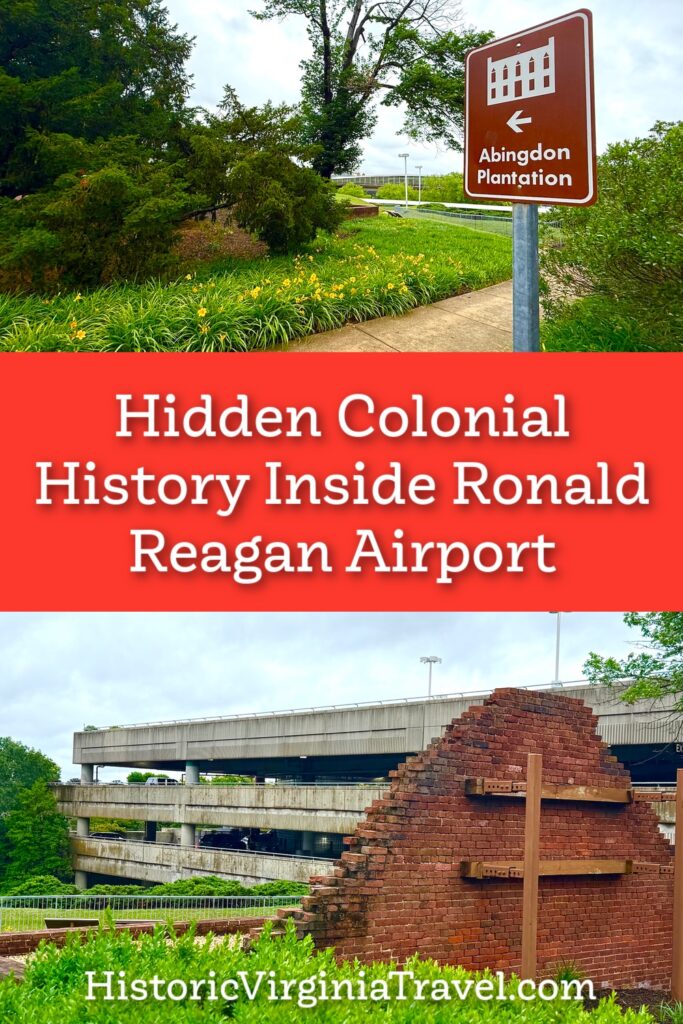
Want to remember this unique destination when planning your travels? Be sure to Pin This post to Pinterest or save it to Flipboard.